
Cost, Budgeting, and Spend Trends
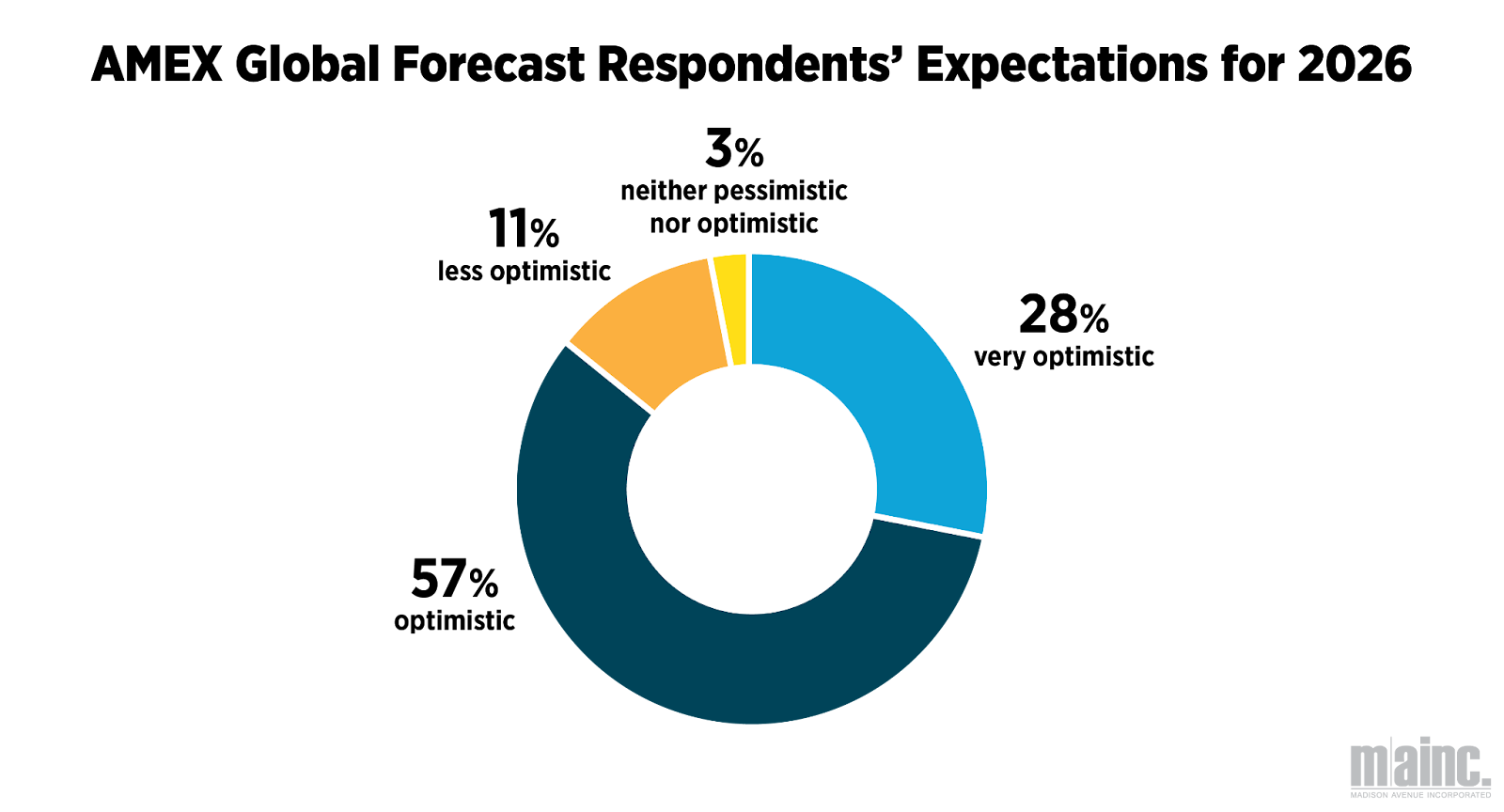
2026 projects the meeting and events industry to continue the upward trajectory and recovery as seen in past years. Optimism is at a five-year high as the industry has continuity and stabilization not seen since 2021. Eighty-five percent of American Express global forecast respondents are optimistic or very optimistic in their expectations for 2026.
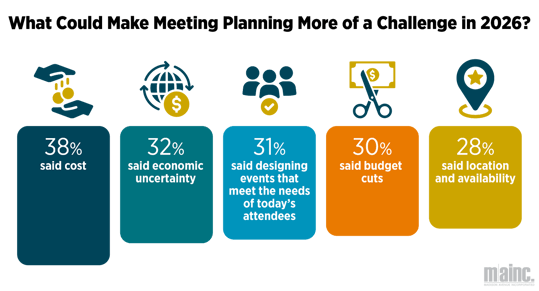
Budgets are expected to increase in 2026, with only 11% of respondents indicating that they expect their budgets to decrease or stay the same, but there is widespread concern that these increases will not keep pace with the rising prices of goods and services. Thirty-eight percent of respondents listed cost as their top challenge in 2026, while 32% listed economic uncertainty. Nearly three-quarters (71%) of meeting and event professionals anticipate cost increases in 2026.
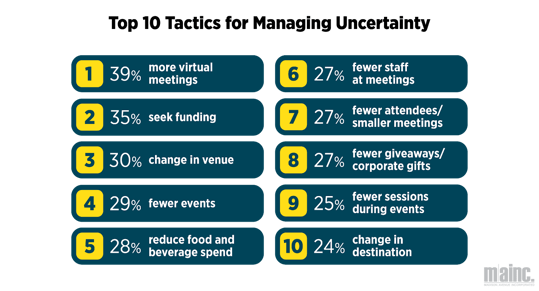
- More Virtual Meetings
- Seek Funding (often through sponsorship)
- Change in Venue
- Fewer Events
- Reduced Food and Beverage Spend
- Fewer Staff at Meetings
- Fewer Attendees/Smaller Meetings
- Fewer Giveaways/Corporate Gifts
- Fewer Sessions During Events
- Change in Destination
Key Insights
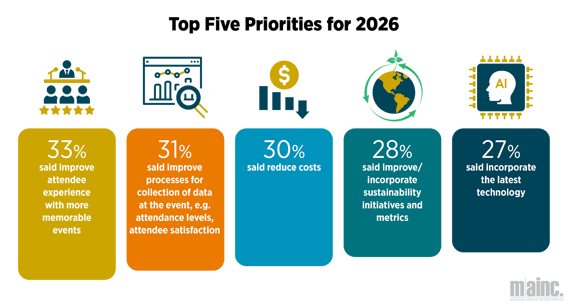
Today’s meeting professionals wear many hats and are constantly making strategic decisions while juggling competing priorities across their programs. From streamlining data collection for smarter future events to making sustainable choices to better support green initiatives, or even just finding creative ways to stretch budgets, a successful event in 2026 is all about finding the sweet spot between planner challenges and attendee expectations.
The Experience or X-Factor
Meetings and events are no longer being measured by square footage, headcount, or how impressive the opening session looked on social media. In 2026, attendees are looking for events that help them accomplish something. They are making selections based on perceived tangible outcomes, like learning a new skill, making new professional connections, or discovering new products and solutions that solve a pain point.
According to Freeman’s October 2025 report, attendees who experience standout, goal-aligned moments at an event are 85% more likely to return! The issue? Only 40% of attendees say they’ve had one of these experiences. A far cry from the 78% of organizers who believe they are delivering them.
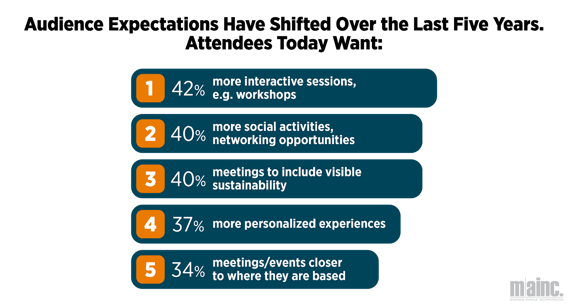
In an economy that is geared to selling experiences, meeting professionals understand that delivering lasting impressions through unforgettable events is paramount to the event’s success and future attendance. One third of respondents put “improving the attendee experience with more memorable events” as their top priority for 2026. They plan to accomplish this through engaging and (ideally) personalized experiences. They believe that attendee expectations over the past 5 years have shifted, and today’s attendees want:
- More Interactive Sessions (e.g. Workshops)
- More Social Activities & Networking Opportunities
- Meetings to Include Visible Sustainability
- More Personalized Experiences
- Meetings/Events Closer to Where They Are Based
Technology and AI
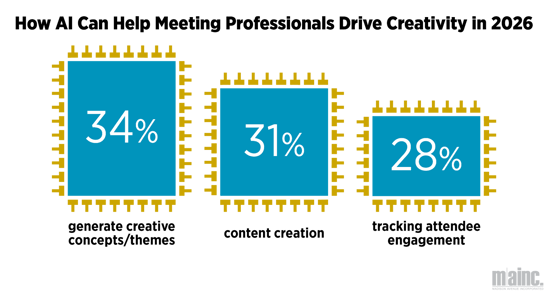
Meeting professionals are planning to use AI for their meetings and events to:
- Generate Creative Concepts or Themes
- Content Creation
- Tracking Attendee Engagement
In 2026, AI won’t feel like a buzzword anymore; it will simply be part of how events get planned and executed. Planners will rely on everyday tools to help them make more informed decisions and continue improving the attendee experience.
These tools will continue to make it easier to spot trends, manage budgets, and understand attendee behavior, all without getting in the way of creativity. Many of the platforms on the market are becoming more intuitive, making it easier to personalize experiences and adjust plans on the fly.
In 2026, planners will continue to use technology to make events feel more personalized with an emphasis on connection, community, and purpose.
Sustainability
By 2026, sustainability will have moved from a nice-to-have commodity to a practical business expectation, with more event professionals building eco-conscious choices into their process from day one. Sustainability continues to rank among the top attendee priorities so sustainable choices and sourcing can directly play a role in the attendee experience. Industry forecasts show sustainability and inclusion rising alongside attendee experience and innovation as core elements of successful meetings.
Meeting professionals will be paying closer attention to real outcomes, like waste reduction, carbon impact, and the social footprint of their events. Instead of isolated gestures, we’ll see more measurable goals, from choosing venues with strong green credentials to tracking emissions and reporting results in meaningful ways.
Attendees and stakeholders increasingly expect transparency and accountability, and planners will respond by weaving sustainability into everything from sourcing and food and beverage to travel and waste strategies.
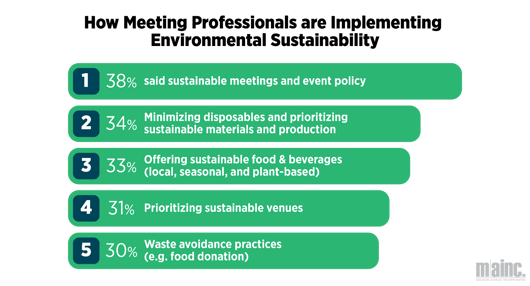
Respondents have already implemented:
- Sustainable Meeting and Events Policy
- Minimizing Disposables and Prioritizing Sustainable Materials and Production
- Offering Sustainable Food and Beverages (local, seasonal, and plant-based)
- Prioritizing Sustainable Venues
- Waste Avoidance Practices (e.g. food donation)
ROE vs ROI (Return on Experience vs Return on Investment)
Understanding that financial outcomes and human impact are closely connected, conversations in 2026 around events’ success will need to include both return on investment and return on experience.
On the ROI side, planners will be under more pressure to prove value. Budgets will be tighter, stakeholders will be more data-driven, and success will be tied to outcomes like business influence, behavior change, and long-term relationships, not just what happened onsite. Measurement will start earlier, track more touchpoints, and extend well beyond the closing session.
At the same time, ROE will take on even greater importance. In a crowded content landscape, how an event makes people feel seen, connected, and inspired will be a major driver of loyalty and long-term value. Planners will continue to design experiences with intention, knowing that engagement, emotion, and trust directly impact future attendance, brand perception, and business results.
In 2026, the strongest events won’t choose between ROI and ROE; they’ll align the two. Meeting professionals will focus on experiences that deliver measurable business value because they resonate on a human level. When done well, investment and experience won’t be separate metrics, but two sides of the same strategy.
Key takeaways
- Design with purpose: Every moment of the event should help attendees get something real out of it, whether that’s a business win or a personal takeaway.
- Close the perception gap: Don’t guess how your event is landing. Ask attendees and test assumptions to see if you’re actually delivering what matters.
- Use technology thoughtfully: AI and analytics should support better decisions, not replace the creativity and judgment that make events feel human.
- Put connection and inclusion first: Long after the event ends, people remember how it made them feel — not just how it looked.
- Spend with intention: Let budgets follow impact, not tradition. Success is about value created, not just how many people showed up.
- Plan for what’s next: Build flexibility into your strategy so you can adapt as costs shift, formats evolve, and audience expectations change.
Conclusion
As the meetings and events industry moves into 2026, one thing is clear: success will come from balance. Planners are navigating rising costs, evolving expectations, and new tools, all while being asked to deliver experiences that truly matter. The role of the meeting professional has never been more strategic or more impactful.
The events that stand out in 2026 won’t be defined by size, spectacle, or tradition. They’ll be defined by purpose. Purposeful design. Purposeful spending. Purposeful use of technology. And a clear focus on outcomes that serve both the business and the people in the room.
Ultimately, the future of meetings and events is human at its core. Technology will support it, sustainability will shape it, and data will help prove its value, but connection, intention, and experience will continue to lead the way. For meeting professionals willing to adapt, prioritize, and plan with clarity, 2026 isn’t just another year ahead; it’s an opportunity to redefine what great events really look like.
The events of the future will be designed for meaning, powered by data, enabled by technology, and grounded in human connection.